90-BALL
Three rows, nine columns
A British ticket has 27 spaces. Each row holds five numbers and four blanks, so every ticket carries 15 numbers. The first column is 1 to 9 and the last is 80 to 90.
Pick a pattern doodlebingo
Start
THE MATHS AND HISTORY
Bingo is a game built on a grid.
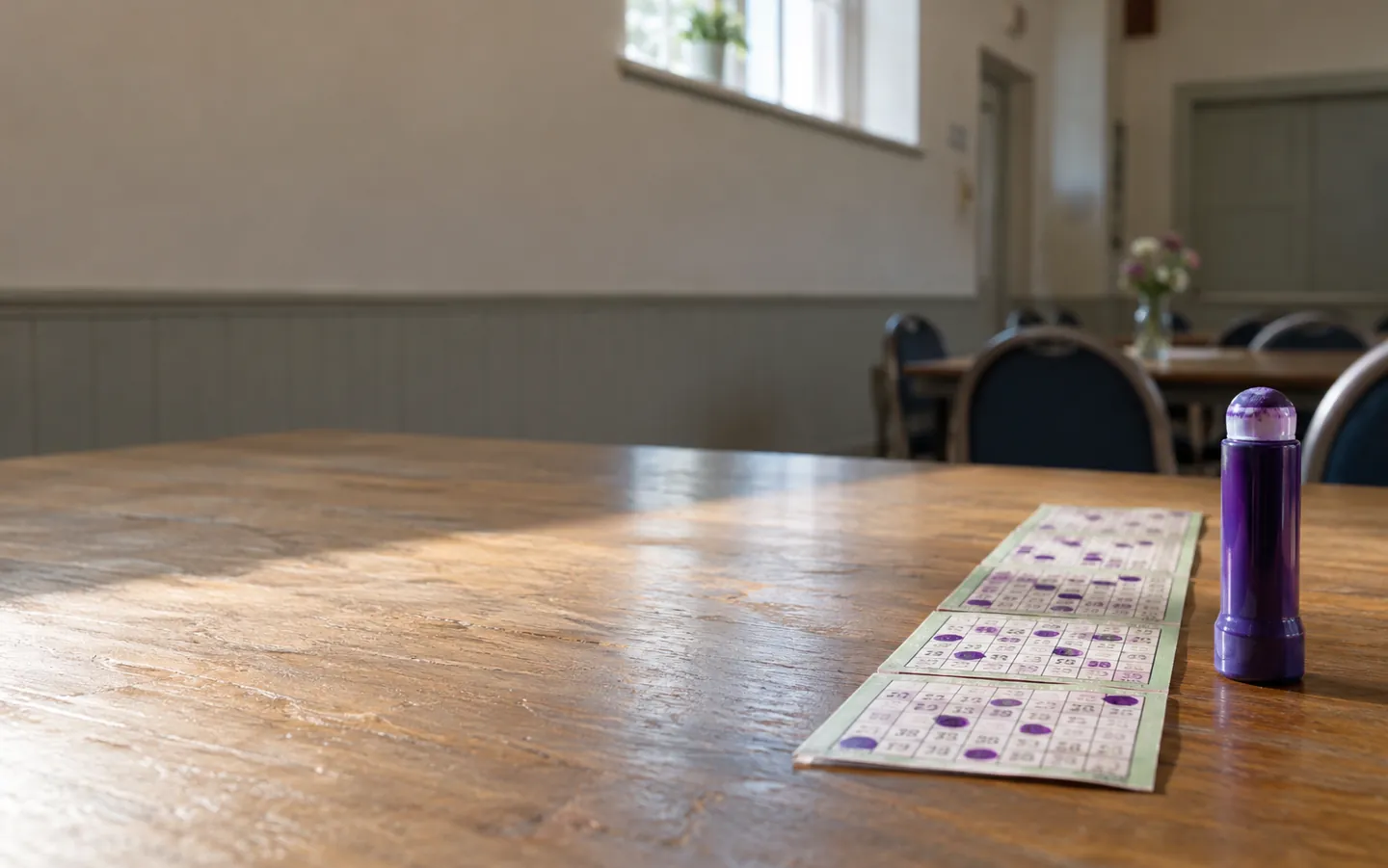
Behind the dabbers and the calls sit some tidy pieces of maths: how a 90-ball ticket is laid out, why six tickets cover every number, and a surprising pattern in who wins at 75-ball.
1 TO 90on six tickets
Pick a patternKeep in mind
THE SHORT ANSWER
In Britain the usual game uses 90 balls.
In North America it is usually 75.
90-BALL
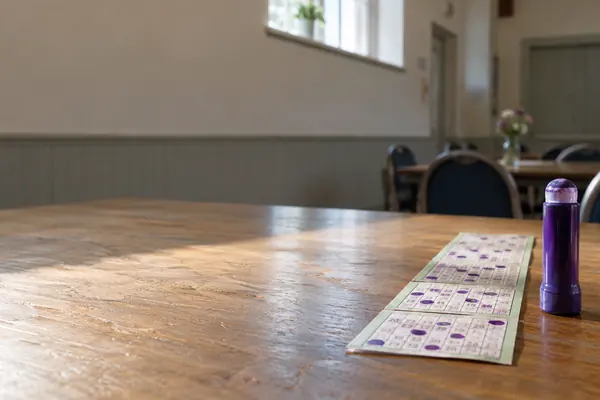
A British ticket has 27 spaces. Each row holds five numbers and four blanks, so every ticket carries 15 numbers. The first column is 1 to 9 and the last is 80 to 90.
Pick a pattern75-BALL
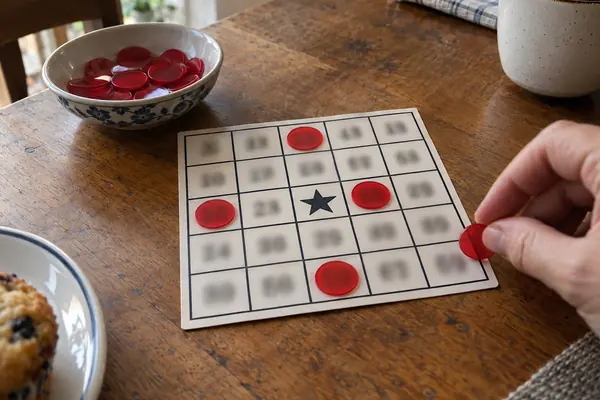
The card spells B-I-N-G-O across the top. Each column draws from 15 numbers, B from 1 to 15 up to O from 61 to 75, and the centre square is free.
See the numbersTHE CALLS
Callers use rhyming nicknames, some dating back to around 1900. They help each number come through clearly in a noisy hall.
Hear the callsA QUICK PATTERN CHECK
Pick a winning pattern to see how many numbers must be marked on one ticket or card. The bar shows how much of the grid has to fill.
Based on the standard ticket and card layouts. This is about how the game works, not gambling advice.
TWO NUMBERS WORTH KNOWING
One figure on how many 75-ball cards could exist,
one on which line usually wins.
≈ 552 septillion
Different 75-ball cards that can be made
Four columns can be filled 360,360 ways and the N column 32,760 ways. Multiplied out, that is 552,446,474,061,128,648,601,600,000 cards. Printing one trillion a second would take over 17 million years.
POSSIBLE CARDS · 75-BALL
≈ 3× more likely
Horizontal vs vertical winners, many cards
On one card, a row and a column are equally likely. With many cards in play, the winning line is horizontal about 75.2 percent of the time and vertical about 24.8 percent (without the free space).
THE BINGO PARADOX · HARVEY MUDD COLLEGE
The paradox was written up in Math Horizons in September 2017. A row needs one number from each of the five letters, while a column needs five numbers from one letter, so across many cards rows tend to finish first.
FOUR THINGS TO SPOT
None of this changes the luck of the draw. It just makes the grid easier to follow when the caller says eyes down.
Step 1
On a 90-ball ticket each number sits in its tens column: 1 to 9 on the left, 80 to 90 on the right.
Step 2
Every row has five numbers. Five marks in one row is a line; all 15 is a full house.
Step 3
Tickets often come in strips of six that share out all 90 numbers, so every call marks one of them.
Step 4
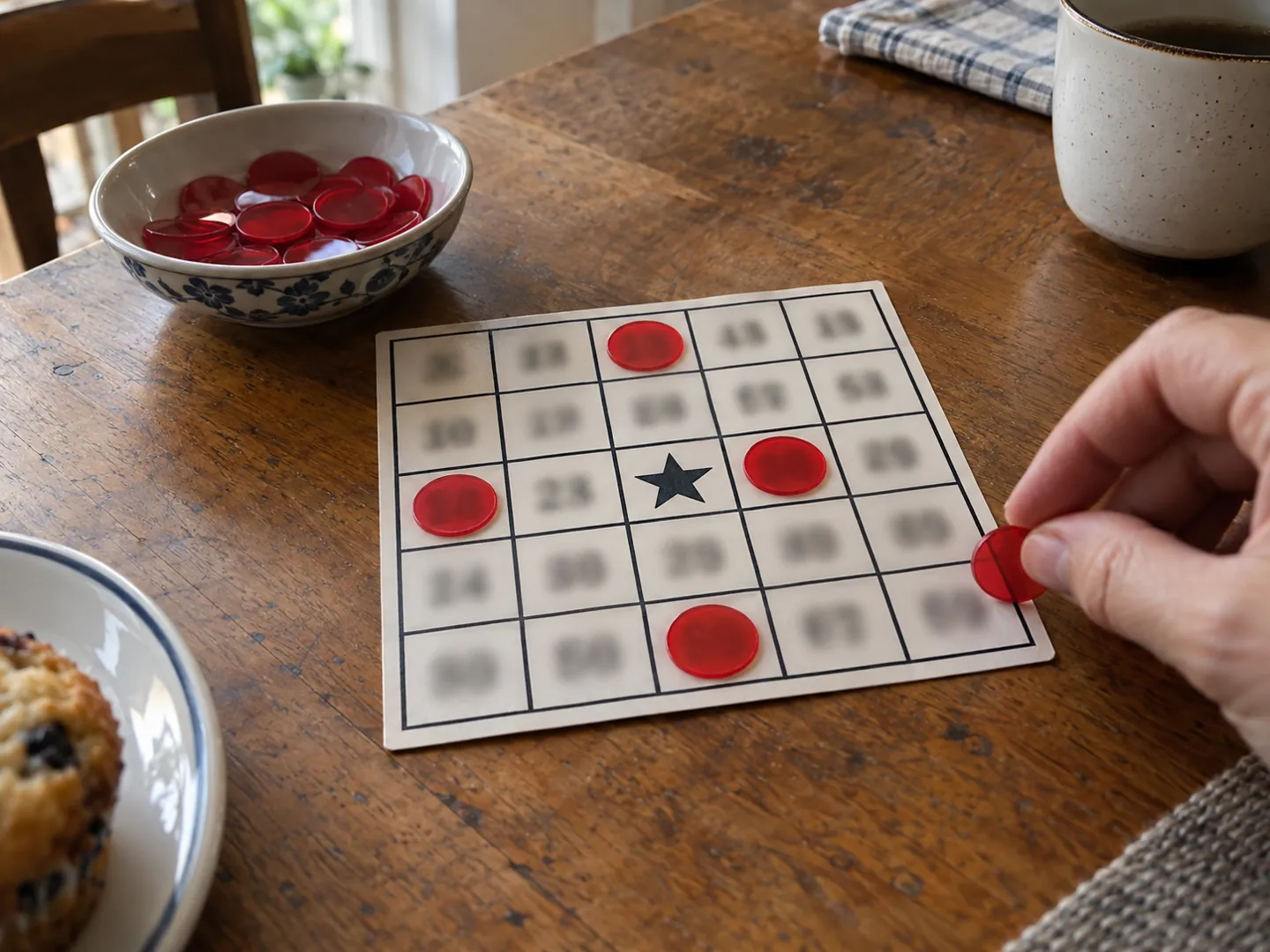
In 75-ball the centre counts as marked, so lines through the middle need one number fewer.
FROM LOTTO TO EYES DOWN
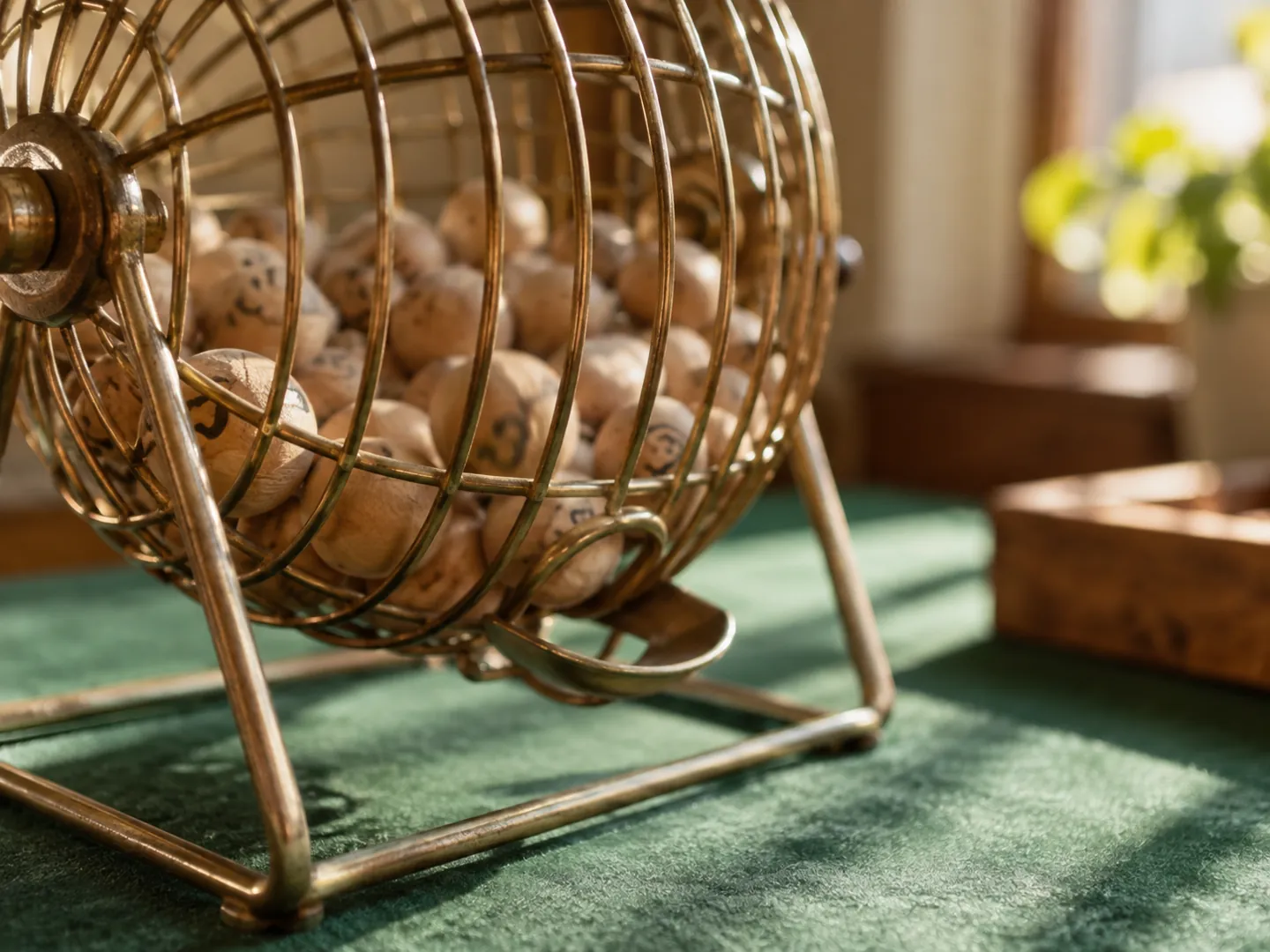
The game is thought to have roots in an Italian lottery of around 1530. It spread to France as le lotto and reached Britain in the 18th century. The Betting and Gaming Act 1960, in force from 1 January 1961, legalised large cash prizes and halls spread across the country.
The calls grew up alongside. Kelly's eye is 1, legs eleven dates to the First World War, two little ducks is 22, half a crown is 26 after the old coin, and 90 is top of the shop. New modern calls were added in 2003.
Questions
90-ball, the usual British game, uses tickets of three rows and nine columns with 15 numbers. 75-ball, common in North America, uses a five by five card under the letters B-I-N-G-O with a free centre square.
Six tickets of 15 numbers make 90, and a strip is arranged so every number from 1 to 90 appears once across it. Whoever holds a full strip marks a number on every call.
In principle yes, but the number of possible cards is about 552 septillion, so printing every one is out of reach. At a trillion cards a second it would take over 17 million years.
With one card, horizontal and vertical lines are equally likely. With many cards in play, the first winning line is horizontal about three times as often as vertical, as mathematicians at Harvey Mudd College showed in 2017.
Many are rhymes or pictures of the numbers, such as two little ducks for 22. Some are military slang from the early 1900s, like legs eleven and doctor's orders for 9. They help numbers carry in a noisy hall.
Destination
Updated
ABOUT THIS NAME
doodlebingo.com is part of the DoodleSale portfolio. It isn't in an auction right now, but you can ask about leasing it.